
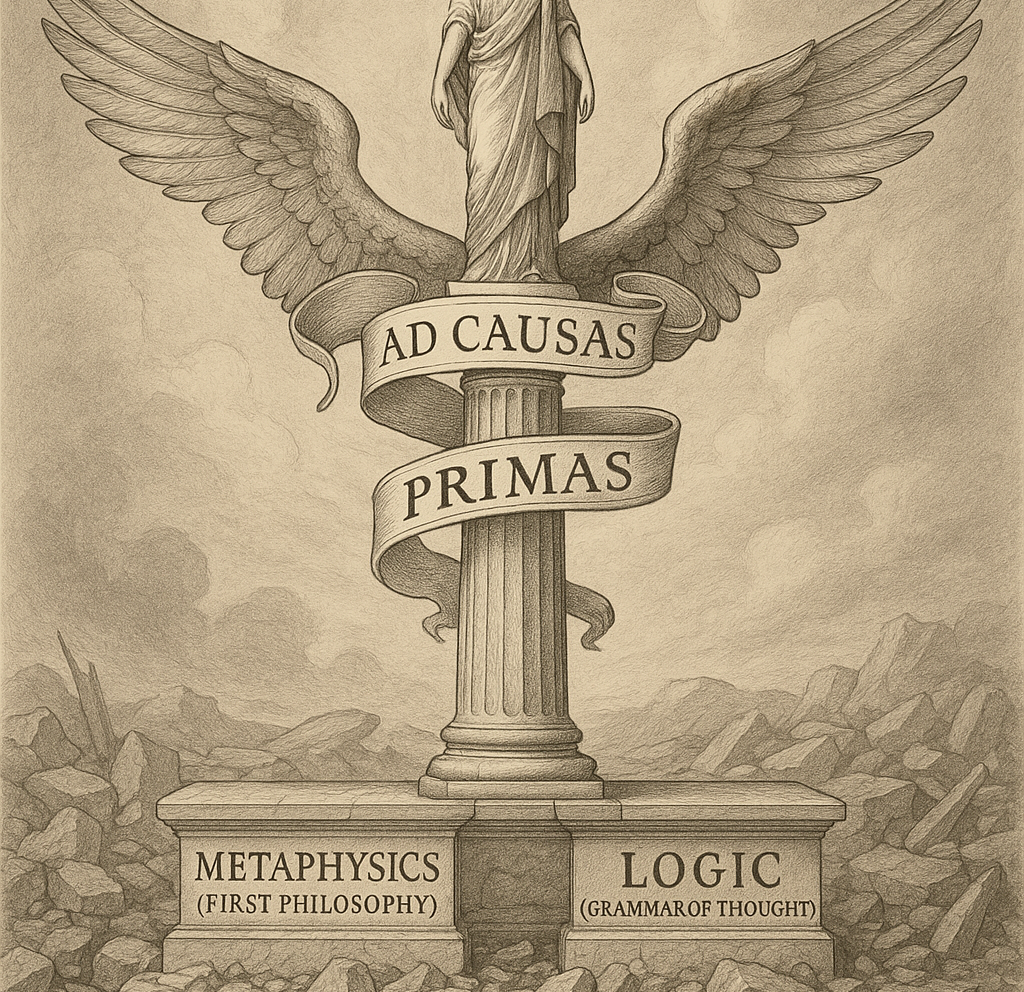
First Principles

- 8 Sections
- 8 Lessons
- 1 Quiz
- 60h Duration
Module 0 – Orientation: Fitrah, Purpose, and How to Study
Module 1 – First Things First: Intellectual Virtues and Metaphysics
Module 2 – Metaphysics, Theology, and Logic as Universal Sciences
Module 3 – Reason and Muslims: A Bittersweet Relationship
Module 4 – Diagnosing the Modern Crisis: Metaphysics, “Isms”, and the Divorce of Sciences
Module 5 – Our Bad Academic Pursuits: Education, Specialization, and Civilization
Module 6 – Reviving Muslim Civilization: Postmodern Crisis and Vista Sophia
Key Terms and Concepts Used Throughtout
This course, titled First Principles, provides an intensive study of the foundational intellectual disciplines necessary for achieving true philosophical wisdom and performing sound causative analysis of contemporary challenges.
Drawing upon classical and philosophical traditions, this course is designed to equip students with the requisite tools to understand the ultimate nature of reality, thought, and existence.
I. The Foundational Science of First Philosophy (Metaphysics)
The central focus of this course is on Metaphysics, or "First Philosophy". Metaphysics is defined as the only universal science and the most important endeavor. It deals with the first cause of things and the study of being itself and the existent in as much as it applies to the principle of existence.
The course will explore fundamental concepts, including:
- Existence, the soul, and the intellect.
- Logical truths, cause and effect, and unity and multiplicity.
- Contingency, potentiality, and actuality.
As the fundamental knowledge, metaphysics precedes all other methods and disciplines, including law, jurisprudence, and exegesis, which are considered particular sciences. Understanding these first principles is crucial because all other particulars proceed from it.
II. Intellectual Virtues and the Methodology of Wisdom (Sophia)
The course introduces Aristotle's five intellectual virtues, focusing primarily on Philosophical Wisdom (Sophia), which is considered the highest. Sophia is the most finished of the forms of knowledge, combining intuitive reason and scientific knowledge. The wise man must not only know what follows from the first principles but also grasp the principles themselves.
This training in philosophy, particularly metaphysics and mathematics, is essential because it:
- Hones and refines the intellect's ability to reason well.
- Is a prerequisite for understanding any subject.
- Enables the acquisition of a sound and excellent faculty of demonstration.
- Stipulates rigor in reasoning.
Students will engage with Logic, which is deemed the grammar of thought, and be trained in the methodology of philosophical inquiry. Metaphysics reveals a method of analysis to understand problems from the first principles, enabling challenges to be addressed at their very causative levels.
III. Application: Diagnosis and Restoration of Civilization
The final module applies the tools of first philosophy and wisdom (Vista Sofia) to contemporary issues. The course aims to provide the requisite intellectual capacity to analyze the spiritual, moral, and intellectual foundations that need treatment.
The course addresses the root cause of the current crisis: the divorce of religious sciences from worldly and physical sciences, and the resulting detachment of physical sciences from ethical considerations.
Students will learn to critically analyze modern ideologies ("isms") by examining their core metaphysical assumptions, recognizing that:
- Western science is inseparable from its metaphysics.
- Adopting Western science and technology without understanding its inherent materialistic metaphysical assumptions leads to personal and societal upheaval.
Ultimately, the mastery of first principles is crucial for the restoration of genuine Faith fortified with reason and genuine civilization and for making a conscious choice about whether external metaphysical bases are compatible with one's worldview.
You must be logged in to submit a review .